 Shop
Shop
-1.png)


eStoreRx™
Online Supplement Dispensary
eStoreRx™ is an easy direct-to-patient ordering & fulfilment program for lifelong wellness.
For 50 years, Biotics Research Corporation has revolutionized the nutritional supplement industry by utilizing “The Best of Science and Nature”. Combining nature’s principles with scientific ingenuity, our products magnify the nutritional
eStoreRx™ is an easy direct-to-patient ordering & fulfilment program for lifelong wellness.
Biotics Research is proud to expand our commitment to education with the Wellness Unfiltered Pro Podcast. Each episode delves into key health topics and the clinical applications of our premier products. Through candid, insightful conversations, our team offers practical guidance to keep you informed and empowered as a healthcare professional.
October 08 2026
The journal Science Bulletin has recently published a review of research on specialized pro-resolving lipid mediators (SPMs) and autoimmune disease. A...
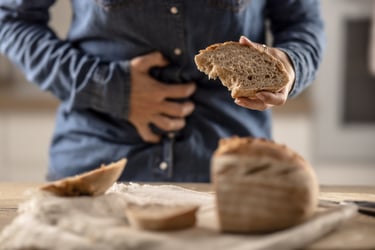
The Lancet Gastroenterology & Hepatology recently published the results of a trial investigating how people with irritable bowel syndrome (IBS) who have self-perceived gluten sensitivity react to gluten, wheat, or sham challenges. This was a randomized and double-blind sham-controlled crossover design, in which participants who believed (prior to the study) that they’d experienced improvement on a gluten-free diet were assigned a random sequence of either receiving gluten, wheat, or sham (in various orders) for 1 week, with a 14 day washout followed by the next challenge, with each participant receiving all 3 possible substances. The food was provided as cereal bars, indistinguishable from each other. The primary outcome was a 50-point worsening in the IBS Symptom Severity Score (IBS-SSS); a total of 28 people completed all 3 challenge periods.
Twenty-nine percent of participants had a 50-point worsening in the IBS-SSS during the sham challenge, compared to 39% with the wheat challenge and 36% with the gluten challenge, but the results were not statistically significant from each other. Adverse events (none serious) were reported in over 90% of participants during each challenge, again not significantly different.
The authors concluded that in this subset of people with IBS, expectations play a major role in symptom generation, with gluten or wheat likely playing a lesser role. While this study highlights the possible importance of expectations, it also had a number of limitations, including a small sample size, a short challenge duration and washout period, and given the large percentage of people experiencing adverse effects even in the sham group, perhaps another aggravating substance that masked the benefit of a gluten-free challenge. For example, multiple other studies suggest that controlling for FODMAP intake is important in this population.
Submit this form and you'll receive our latest news and updates.

*These statements have not been evaluated by the Food and Drug Administration. This product has not intended to diagnose, treat, cure, or prevent any disease.
© 2026 Biotics Research Corporation - All Rights Reserved
Submit your comment