 Shop
Shop
-1.png)


eStoreRx™
Online Supplement Dispensary
eStoreRx™ is an easy direct-to-patient ordering & fulfilment program for lifelong wellness.
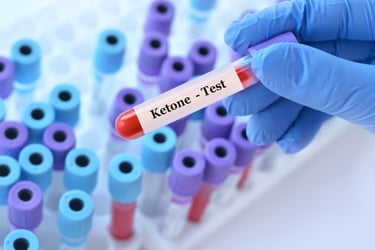
Research on ketogenic diets – a.k.a. ketogenic metabolic therapy (KMT) – is expanded across a range of applications. Research on the efficacy of any dietary intervention faces the obstacle of accurately assessing what subjects actually eat. Food frequency questionnaires and dietary recalls – perhaps the most widely-used methods – have been called “fatally flawed and pseudoscientific.” Keto diets are unique in this regard, because unlike most other dietary interventions, KMT induces a measurable metabolic state (nutritional ketosis) that can be verified through objective measurement of ketones in the blood, breath, or urine.
A 2025 paper published in Frontiers in Nutrition provides a detailed discussion highlighting the benefits of using of blood beta-hydroxybutyrate (BHB) measurements in research evaluating ketogenic diets. Other methods for measuring ketones – breath acetone and urine acetoacetate – are less invasive and more economical but have shortcomings that make them less reliable compared to blood measurements.
As opposed to dietary recalls, blood ketone testing serves “as a reliable and objective biomarker of adherence to KMTs by providing direct physiological evidence of ketosis.” The authors note that ketone testing “improves confidence in adherence reporting compared to self-reported dietary intake.”
The utility of measuring blood ketone levels goes beyond objective monitoring of dietary adherence. Blood ketone measurements can guide personalized treatment adjustments based on individual metabolic responses and may also facilitate behavior change through real-time feedback. Patients and their clinicians can both see the metabolic response and use this data to inform changes to the diet or other contributing factors, such as medications, supplements, and lifestyle issues like physical activity and sleep.
The authors note, “Capillary blood BHB testing provides an objective, quantifiable, and actionable measure of ketosis in KMTs. It offers real-time physiological feedback that reflects both dietary adherence and metabolic response. It supports behavior change, enables personalized care, and adds rigor to clinical research protocols.”
Ketone testing is not without drawbacks, though. High-frequency testing (ranging from daily to multiple times per day) provides the most precise and actionable feedback, but this can be costly and burdensome. Moreover, the optimal frequency of testing is still unknown, and with research in this area still being relatively new, standardized reference ranges across diverse populations have not yet been established, nor have defined, agreed upon targets for different therapeutic goals. But perhaps this makes it all the more important that ketone measurements continue to be part of future research so that more data can be collected with the long-term goal of establishing these parameters.
Continuous glucose monitors (CGMs) are now widely available and empower patients and clinicians with real-time feedback to guide behavior change and clinical interventions. Continuous ketone monitors (CKMs) are currently under development and it’s possible these will reduce objections to ketone measuring, as they will be more convenient, less invasive, and less cumbersome than taking blood measurements multiple times a day.

Submit your comment