 Shop
Shop
-1.png)

eStoreRx™
Online Supplement Dispensary
eStoreRx™ is an easy direct-to-patient ordering & fulfilment program for lifelong wellness.
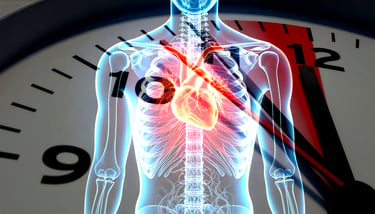
Physiological Reviews recently published a comprehensive review examining the role of circadian biology in cardiovascular health. Circadian rhythms are fundamental to homeostasis, regulating physiological processes throughout the body. They influence sleep-wake cycles, hormone secretion, metabolism, inflammation, immune function, autonomic activity, and neuroendocrine signaling, providing an important connection between mind-body regulation and physical health. Within the cardiovascular system, circadian rhythms modulate blood pressure, vascular tone, coagulation, cardiac metabolism, and myocardial function. Disruption of this temporal regulation may affect cardiovascular physiology and cardiometabolic health.
Controlled human research provides evidence that circadian misalignment can alter cardiovascular physiology. A study published in Proceedings of the National Academy of Sciences experimentally induced circadian misalignment in 14 healthy adults and found increases in 24-hour systolic and diastolic blood pressure, reduced cardiac vagal modulation, and increases in inflammatory markers including interleukin-6, C-reactive protein, resistin, and tumor necrosis factor-α. The study was small and evaluated short-term effects but demonstrated measurable changes in cardiovascular regulation and inflammatory signaling following circadian disruption.
Longer-term observational evidence extends these findings to cardiometabolic health. A 2023 review in Obesity examined shift work, chronotype, sleep timing and regularity, and meal timing, and identified associations with obesity, elevated blood pressure, dyslipidemia, inflammation, and diabetes. These exposures frequently occur alongside sleep restriction, altered dietary patterns, psychosocial stress, and reduced physical activity, making the independent contribution of circadian disruption difficult to determine. The evidence supports an association between disrupted biological timing and cardiometabolic risk.
Circadian regulation extends beyond the cardiovascular system. The kidney follows circadian patterns in sodium handling, fluid balance, and blood pressure regulation, while peripheral clocks coordinate metabolic activity throughout the body. Sleep, autonomic function, endocrine signaling, metabolism, immune activity, and cardiovascular physiology are interconnected through circadian timing. Disruption of these rhythms may affect cardiovascular homeostasis through multiple pathways.
At the molecular level, core clock components including CLOCK, BMAL1, PER, and CRY regulate rhythmic gene expression and downstream metabolic processes. A 2024 review in the Journal of Clinical Investigation links disruption of these molecular clocks with altered cellular metabolism, obesity, metabolic syndrome, and type 2 diabetes. These conditions are established cardiovascular risk factors and may represent pathways through which circadian disruption contributes to cardiometabolic disease.
Circadian timing is influenced by environmental and behavioral signals. Light is the primary cue for the central circadian clock, with morning light helping synchronize circadian timing, while sleep, food intake, and physical activity influence peripheral clocks. Shift work, irregular sleep schedules, and eating at biologically inappropriate times can disrupt coordination between these signals and endogenous circadian rhythms. Circadian misalignment may affect metabolic, autonomic, inflammatory, and cardiovascular function.
Meal timing is an emerging area of exploration. A 2025 review in Science Bulletin examined intermittent fasting from a circadian perspective and reviewed evidence for effects on cardiac function, insulin sensitivity, inflammation, and lipid metabolism. Aligning eating and fasting periods with biological rhythms may have therapeutic relevance.
Taken collectively, the evidence positions circadian biology as a significant component of homeostasis and cardiovascular health. Circadian timing intersects with sleep, neuroendocrine and autonomic regulation, metabolism, inflammation, nutrition, physical activity, renal function, and vascular health. Considering these interconnected processes may provide a more complete understanding of the factors shaping cardiovascular health.

Submit your comment