 Shop
Shop
-1.png)
eStoreRx™
Online Supplement Dispensary
eStoreRx™ is an easy direct-to-patient ordering & fulfilment program for lifelong wellness.
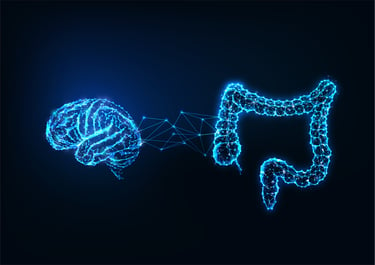
The journal Frontiers in Immunology recently published a review of the microbiota-gut-brain axis (MGBA), exploring how the microbiome modulates gut-brain signaling and highlighting its potential role as a key regulator of mental health. This review outlines three pathways by which gut microbiota influence depression via the MGBA; immune regulation mediated by cytokine release, endocrine modulation, such as through the hypothalamic-pituitary-adrenal (HPA) axis, and neural signaling, mediated via neurotransmitters and the vagus nerve. Understanding the links between depression and the MGBA holds promise for potential prevention and management of depression and other neuropsychiatric conditions.
In one frequently used animal model, for example, stress has been associated with changes in the microbiome, marked by alterations in the relative abundances of Lactobacillus and Akkermansia, which affect neuroinflammation (interferon-γ and tumor necrosis factor-alpha levels) in the brain and behavior. But fecal transplants of microbiota from stressed to unstressed animals result in the same neuroinflammation and altered behavior. This model has also been used to demonstrate that modulation of the microbiome (with fecal transplants from highly resilient animals) can reverse the neurological impairments (inhibited hippocampal neurogenesis) and promote recovery from stress-induced depression. Short-chain fatty acid supplementation has also been shown to reverse anxiety and depression in this model, in part by influencing tryptophan metabolism, inflammation, and neurotransmitters (GABA, norepinephrine, and dopamine) in the brain.
Many human clinical trials have also documented differences in the composition of the microbiome between people with and without depression. For example, a 2021 systematic review and meta-analysis of 59 case-control studies published in JAMA Psychiatry found similar patterns of microbial changes across a variety of disorders, including depression, anxiety, and schizophrenia, such as decreased abundance of the genera Faecalibacterium and Coprococcus and increased abundance of Eggerthella (in depression, bipolar disorder, psychosis, and schizophrenia). Faecalibacterium has been associated with short-chain fatty acid (butyrate) production and healthy support of the inflammatory pathways, while Eggerthella has been linked to increased GI inflammation and impaired butyrate secretion. Rather than one genus or species being linked to a specific diagnosis, it seems more likely that dysbiosis and an impaired GI inflammatory response may underlie a broader range of conditions.
A number of trials have also shown probiotics and other microbiota-targeted therapies can improve depressive symptoms. For example, a 2023 randomized and controlled trial published in JAMA Psychiatry found that supplementation with a multi-strain probiotic improved symptoms of anxiety and depression compared to placebo over an 8-week trial (both of which were given alongside standard medication). Another double-blind placebo-controlled trial found improvements in cognitive function and mood among older adults when supplemented with strains of Bifidobacterium. A 2023 umbrella meta-analysis of 10 meta-analyses found that probiotics significantly improved depressive symptoms, with more robust effects at higher doses (>10 × 109 CFU) and a longer treatment duration. The recent review in Frontiers in Immunology suggests that advances in multi-omics technologies and other innovations may lead to more personalized treatments and a “new era of microbiome-based depression therapies”.

Submit your comment